Quetta, Balochistan Province, Pakistan
🇵🇰 Quetta, formerly known as Shalkot, is the provincial capital and largest city of the Pakistani province of Balochistan. It is also the 10th largest city in Pakistan. It was largely destroyed in the 1935 Quetta earthquake, but was rebuilt. Quetta is at an average elevation of 1,680 metres above sea level, making it Pakistan's only high-altitude major city. The city is known as the "Fruit Garden of Pakistan", due to the numerous fruit orchards in and around it, and the large variety of fruits and dried fruit products produced there.
Located in northern Balochistan near the Pakistan-Afghanistan border and the road across to Kandahar, Quetta is a trade and communication centre between the two countries. The city is near the Bolan Pass route which was once one of the major gateways from Central Asia to South Asia. Quetta played an important role militarily for the Pakistani Armed Forces in the intermittent Afghanistan conflict.
Transportation Quetta is on the western side of Pakistan and is connected to the rest of the country by a network of roads, railways and its international airport close to its center. At an altitude of 1,605 metres (5,266 feet) above sea level, Quetta Airport is the second highest airport in Pakistan. Pakistan International Airlines has regular flights to and from the other major cities of Pakistan including Islamabad, Gwadar, Karachi, Lahore and Peshawar.
Passengers boarding a Chaman bound train at Baleli, Quetta Quetta Railway Station is one of the highest railway stations in Pakistan at 1,676 metres (5,499 feet) above sea level. The railway track was laid in the 1890s during the British era to link Quetta with rest of the country. The extensive network of Pakistan Railways connects Quetta to Karachi in the south, by a 863 km (536 mi) track, Lahore in the north-east (1,170 km or 727 miles) and Peshawar further north-east (1,587 km or 986 miles). A metalled road runs alongside the railway that connects Quetta to Karachi via the nearby town of Sibi to Jacobabad and Rohri in the plain of the River Indus.
Facilities The Shaheed Nauoroz Stadium is the largest stadium in the city. The city also has Ayub National Stadium, a multipurpose stadium used for football and cricket and Bugti Stadium for cricket. Local facilities were created in the city for mountain climbing and caving as well as water sports. Hayatullah Khan Durrani (Pride of Performance) is the chief executive of Hayat Durrani Water Sports Academy, Balochistan's first and only Rowing, Canoeing, Kayaking, Sailing, rough swimming and boating academy where all such facilities provide free to the youth members at Hanna Lake.
Quetta, Balochistan Province, Pakistan
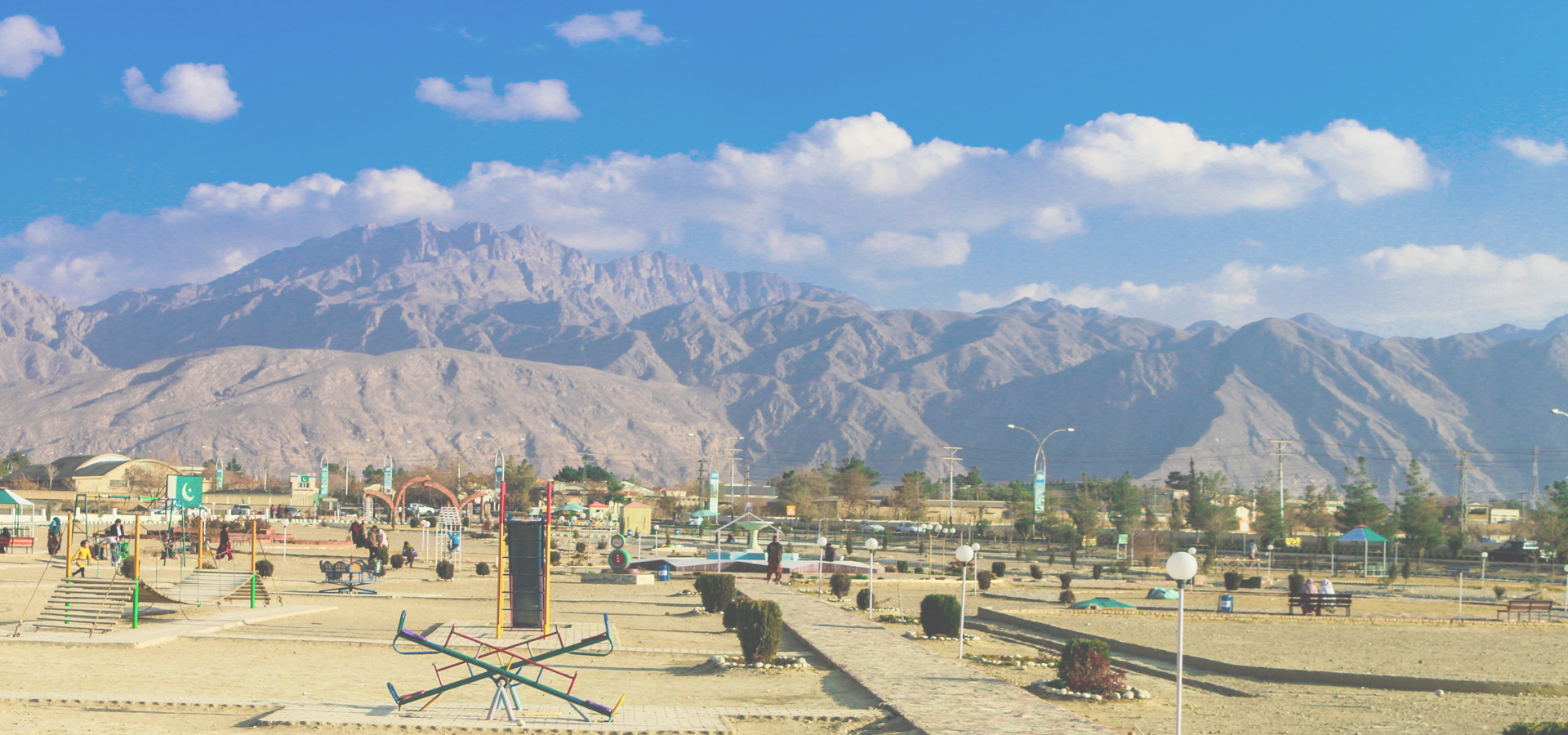

Quetta was ranked #942 by the Nomad List which evaluates and ranks remote work hubs by cost, internet, fun and safety. Quetta has a population of over 1,001,205 people. Quetta also forms the centre of the wider Balochistan Province which has a population of over 12,335,129 people.
To set up a UBI Lab for Quetta see: https://www.ubilabnetwork.org Twitter: https://twitter.com/UBILabNetwork
🇺🇸 Lake Charles 30.23
🇨🇳 Shifangcun 30.283
🇪🇬 Al Khankah 30.217
🇺🇸 Panama City 30.185
🇦🇫 Mazar-e Sharif 67.117
Locations Near: Quetta 67.023,30.2219
🇵🇰 Loralai 68.6,30.367 d: 152.3
🇦🇫 Kandahar 65.717,31.617 d: 198.9
🇵🇰 Dera Bugti 69,28.833 d: 245.8
🇵🇰 Musakhel Bazar 69.49,30.52 d: 239
🇵🇰 Barkhan 69.517,29.883 d: 242.9
🇵🇰 Shikarpur 68.626,27.966 d: 295.3
🇵🇰 Larkana 68.2,27.55 d: 318.4
Antipodal to: Quetta -112.977,-30.222
🇵🇫 Papeete -149.566,-17.537 d: 16057.9
🇵🇪 Callao -77.15,-12.067 d: 15813.8
🇵🇪 San Isidro -77.033,-12.083 d: 15804.3
🇵🇪 Lima -77.033,-12.05 d: 15802.3
🇵🇪 Villa El Salvador -77,-12.05 d: 15799.3
🇵🇪 Pisco -76.2,-13.717 d: 15828.2
🇵🇪 Ancón -77.15,-11.733 d: 15792.8
🇵🇪 Chimbote -78.583,-9.067 d: 15742.5
🇨🇱 San Pedro de la Paz -73.1,-36.833 d: 16274.1
🇨🇱 Concepción -73.05,-36.817 d: 16269.6