Eindhoven, North Brabant, Netherlands

History | 16th–18th centuries | History : 19th century : 20th century : 21st century | Geography | Economy | Knowledge economy initiatives | EIT co-location | Education | Higher and adult education | Culture and recreation | Cultural institutions | Culture : Museums | Open-air art | Light art | Music and theatre | Recreation | Parks | Sport | Entertainment | Strijp-S | Media | Air traffic | Rail traffic | Transport : Road | Local public transit | Bicycle infrastructure | Medical care

🇳🇱 Eindhoven is the fifth-largest city and a municipality of the Netherlands, located in the south of the country. It is the largest city in the province of North Brabant.

Eindhoven was originally located at the confluence of the Dommel and the Gender. A municipality since the 13th century, Eindhoven witnessed rapid growth starting in the 1900s by textile and tobacco industries. Two well-known companies, DAF Trucks and Philips, were founded in the city; Philips would go on to become a major multinational conglomerate while based in Eindhoven. Apart from Philips, Eindhoven also contains the globally famous Design Academy Eindhoven.

Neighbouring cities and towns include Son en Breugel, Nuenen, Geldrop-Mierlo, Helmond, Heeze-Leende, Waalre, Veldhoven, Eersel, Oirschot and Best. It is also part of The Brabantse Stedenrij combined metropolitan area.

History The written history of Eindhoven started in 1232, when Duke Hendrik I of Brabant granted city rights to Eindhoven, then a small town right on the confluence of the Dommel and Gender streams. At the time of granting of its charter, Eindhoven had approximately 170 houses enclosed by a rampart. Just outside the city walls stood a small castle. The city was also granted the right to organize a weekly market and the farmers in nearby villages were obliged to come to Eindhoven to sell their produce. Another factor in its establishment was its location on the trade route from Holland to Liège.

Around 1388, the city's fortifications were strengthened further. And between 1413 and 1420, a new castle was built within the city walls. In 1486, Eindhoven was plundered and burned by troops from Guelders.

16th–18th centuries The reconstruction of Eindhoven was finished in 1502, with a stronger rampart and a new castle. However, in 1543 it fell again, its defense works having been neglected due to poverty.

A big fire in 1554 destroyed 75% of the houses but by 1560 these had been rebuilt with the help of William I of Orange. During the Dutch Revolt, Eindhoven changed hands between the Dutch and the Spanish several times during which it was burned down by renegade Spanish soldiers, until finally in 1583 it was captured once more by Spanish troops and its city walls were demolished.

Eindhoven did not become part of the Netherlands until 1629. During the French occupation, Eindhoven suffered again with many of its houses destroyed by the invading forces. Eindhoven remained a minor city after that until the start of the Industrial Revolution.

History: 19th century The Industrial Revolution of the 19th century provided a major growth impulse. Canals, roads and railroads were constructed. Eindhoven was connected to the major Zuid-Willemsvaart canal through the Eindhovens Kanaal branch in 1843 and was connected by rail to Tilburg, 's-Hertogenbosch, Venlo and Belgium between 1866 and 1870. Industrial activities initially centred around tobacco and textiles and boomed with the rise of lighting and electronics giant Philips, which was founded as a light bulb manufacturing company in Eindhoven in 1891.

Industrialisation brought population growth to Eindhoven. On the establishment of the Kingdom of the Netherlands in 1815, Eindhoven had 2,310 inhabitants.

History: 20th century By 1920, the population was 47,946; by 1925 it was 63,870 and in 1935 that had ballooned to 103,030. The explosive growth of industry in the region and the subsequent housing needs of workers called for radical changes in administration, as the City of Eindhoven was still confined to its medieval moat city limits. In 1920, the five neighbouring municipalities of Woensel (to the north), Tongelre (northeast and east), Stratum (southeast), Gestel en Blaarthem (southwest) and Strijp (west), which already bore the brunt of the housing needs and related problems, were incorporated into the new Groot-Eindhoven ("Greater Eindhoven") municipality. The prefix "Groot-" was later dropped.

After the incorporation of 1920, the five former municipalities became districts of the Municipality of Eindhoven, with Eindhoven-Centrum (the City proper) forming the sixth. Since then, an additional seventh district has been formed by dividing the largest district, that of Woensel, into Woensel-Zuid and Woensel-Noord.

The early 20th century saw additions in technical industry with the advent of car and truck manufacturing company Van Doorne's Aanhangwagenfabriek (Trailer factory) (DAF) which was later renamed to Van Doorne's Automobiel Fabriek and the subsequent shift towards electronics and engineering, with the traditional tobacco and textile industries waning and finally disappearing in the 1970s.

A first air raid in World War II was flown by the RAF on 6 December 1942 targeting the Philips factory downtown, in which 148 civilians died, even though the attack was carried out on a Sunday. Large-scale air raids, including the bombing by the Luftwaffe on 19 September 1944 during Operation Market Garden, destroyed large parts of the city and killed 227 civilians while leaving 800 wounded. The reconstruction that followed left very little historical remains and the postwar reconstruction period saw drastic renovation plans in highrise style, some of which were implemented. At the time, there was little regard for historical heritage. During the 1960s, a new city hall was built and its Neo-gothic predecessor (1867) demolished to make way for a planned arterial road that never materialised.

The 1970s, 1980s, and 1990s saw large-scale housing developments in the districts of Woensel-Zuid and Woensel-Noord, making Eindhoven the fifth-largest city in the Netherlands.

History: 21st century At the start of the 21st century, a whole new housing development called Meerhoven was constructed at the site of the old airport of Welschap, west of Eindhoven. The airport itself, now called Eindhoven Airport, had moved earlier to a new location, paving the way for much-needed new houses. Meerhoven is part of the Strijp district and is partially built on lands annexed from the municipality of Veldhoven.

Geography The villages and city that make up modern Eindhoven were originally built on sandy elevations between the Dommel, Gender and Tongelreep rivers. Beginning in the 19th century, the basins of the rivers themselves have also been used as housing land, resulting in occasional flooding in the city centre. Partly to reduce flooding, the bed of the Gender stream, which flowed directly through the city centre, was dammed off and filled up after the War, and the course of the Dommel was regulated. New ecological and socio-historical insights have led to parts of the Dommel's course being restored to their original states, and plans to have the Gender flow through the centre once again.

The large-scale housing developments of the 20th century saw residential areas being built on former agricultural lands and woods, former heaths that had been turned into cultivable lands in the 19th century.

The city is currently divided into seven districts: • 1. Centrum; • 2. Woensel-Noord; • 3. Woensel-Zuid; • 4. Tongelre; • 5. Stratum; • 6. Gestel; • 7. Strijp.

Economy Eindhoven has grown from a little town in 1232 to one of the biggest cities in the Netherlands with around 230,000 inhabitants in 2020. Much of its growth is due to Philips, DAF Trucks and Brabantia.

During the 19th century, Eindhoven grew into an industrial town with factories for textile weaving, cigar manufacturing, match making and hat making. In 1891, brothers Gerard and Anton Philips founded the small light bulb factory that would grow into one of the largest electronics firms in the world. Philips' presence is probably the largest single contributing factor to the major growth of Eindhoven in the 20th century. It attracted and spun off many hi-tech companies, making Eindhoven a major technology and industrial hub. A full third of the total amount of money spent on research in the Netherlands was spent in or around Eindhoven. A quarter of the jobs in the region are in technology and ICT, with companies such as FEI Company (once Philips Electron Optics), NXP Semiconductors (formerly Philips Semiconductors), ASML, ALTEN, Simac, Neways Electronics and the aforementioned Philips and DAF.

Eindhoven has long been a centre of co-operation between research institutes and industry. This tradition started with Philips (the NatLab was a physical expression of this) and has since expanded to large co-operative networks. The Eindhoven University of Technology hosts an incubator for technology startups and the NatLab has developed into the High Tech Campus Eindhoven. Also, TNO has opened a branch on the university campus. This tradition has also fostered inter-industry co-operation in the region; one example of this is the announcement in September 2010 of a new research lab for high-grade packaging materials, a co-operation of IPS Packaging and Thales Cryognetics.

This co-operative tradition has also developed into a different direction than the traditional technology research done at the university. Starting in 2002, the university, the Catharina hospital, Philips Medical and the University of Maastricht joined forces and started joint research into biomedical science, technology and engineering. Within Eindhoven, this research has been concentrated in a new university faculty (BioMedical Technology or BMT). This development has also made Eindhoven a biomedical technology hub within the country and its (European) region.

Prime examples of industrial heritage in Eindhoven are the renovated Witte Dame ("White Lady") complex, a former Philips lamp factory; and the Admirant building (informally known as Bruine Heer or "Brown Gentleman" in reference to the Witte Dame across the street), the former Philips main offices. The Witte Dame currently houses the municipal library, the Design Academy and a selection of shops. The Admirant has been renovated into an Office building for small companies. Across the street from the Witte Dame and next to the Admirant is Philips' first light bulb factory (nicknamed Roze Baby, or "Pink Baby", in reference to its pink colour and much smaller size when compared to the "White Lady" and "Brown Gentleman"). The small building now houses the "Centrum Kunstlicht in de Kunst" (centre artificial light in art) and the "Philips Incandescent Lamp Factory of 1891" museum.

Knowledge economy initiatives Due to its high-tech environment, Eindhoven is part of several initiatives to develop, foster and increase a knowledge economy. Chief among these are: • Brainport Top Technology Region, a cooperative initiative of local government, industry and the Eindhoven University of Technology to develop the local knowledge economy of the Eindhoven region. • Brainport Development, an extension of the Top Technology Region, Brainport Development serves as the Eindhoven's regional innovation agency to maintain its position as an innovation hub. • Samenwerkingsverband Regio Eindhoven, a cooperative agreement among the municipalities in the Eindhoven metropolitan area. • The Eindhoven-Leuven-Aachen triangle, a cooperation agreement between the universities and surrounding regions of Eindhoven, Leuven (Belgium) and Aachen (Germany).

The Intelligent Community Forum named the Eindhoven metro region the No. 21 intelligent community in 2008 and the No. 7 intelligent community in 2009 and 2010. In 2011, the ICF named Eindhoven the Intelligent Community of the Year. Since 2012, Eindhoven has vanished from the top 7 of intelligent communities.

EIT co-location Eindhoven is one of the co-location centres of the European Institute of Innovation and Technology (EIT). It hosts two Knowledge and Innovation Communities (KICs): Innoenergy (Sustainable Energy) and EIT ICT Labs (Information and Communication Technology). The co-locations are on the High Tech Campus Eindhoven.

Education Eindhoven, being a city with a 240,000+ population, is served by a large number of schools both at primary and secondary education levels. In addition, Eindhoven is a higher-education hub within the southern Netherlands, with several institutes of higher education that serve students from the extended region of North Brabant, Zeeland, Limburg and parts of the surrounding provinces.

Primary education Primary education is provided to the children aged 4 to 12 in Eindhoven through a large number of primary schools.

Higher and adult education Eindhoven hosts four different public institutions for higher and adult education, as well as a number of private institutions offering courses and trainings. The public institutions hosted in Eindhoven are: • Design Academy. • Eindhoven University of Technology. • Fontys University of Applied Sciences (Eindhoven branch). • Tio University • SintLucas  • Summa College 

The Open University also has a study centre in Eindhoven.

Among the private institutions is the Centrum voor Kunsten Eindhoven, which offers art-related courses to adults (including a DJ-education).

Culture and recreation Culturally and recreationally, Eindhoven was formed by two forces: • Being a university city, Eindhoven has a large student population. The students from the Eindhoven University of Technology and a number of undergraduate schools give Eindhoven a young population, whose recreational needs are catered to by several different festivals, clubs and such. • For a long time Eindhoven was the main location of Philips. The Philips company undertook a lot of effort in the "cultural formation" of its workforce and has given the city both cultural institutions (such as the former POC and the Muziekcentrum Frits Philips) and sporting institutions (notably PSV).

Eindhoven is also known as the City of Light, due to Philips originating from there and because of several projects involving lighting up buildings of the city. During Carnival, Eindhoven is rechristened Lampegat (Hamlet of Lamps, although for the ironic purposes of carnival the translation Hole in the ground with lamps is closer to the mark); this refers again to the important role of Philips in the Eindhoven community.

Cultural institutions There are several cultural institutions in and around the city.

Culture: Museums • There are two museums dedicated to the major topics of the city's industrial heritage: the DAF Museum has a collection of DAF cars and the Philips Gloeilampenfabriekje anno 1891 (across the street from the Kempenland) documents the early lightbulb industry. • The former district court house now houses the Designhuis, a public podium and interaction area for modern design and innovation. • The Eindhoven Museum is an archaeological open-air museum which focuses on the region's Iron Age and Middle Ages. It merged in 2011 with Museum Kempenland which was a regional museum, which documents the history of the Kempenland region in objects, documents, paintings and educational activities. Museum Kempenland's old location, the Steentjeskerk, is closed. • The Inkijkmuseum (the Look-In museum; housed in an old linen factory in the Dommelstraat) is a small but special museum: it offers ever-changing exhibits, which are to be viewed through the building's windows. • The Van Abbemuseum has a collection of modern and contemporary art, including works by Picasso, Kandinsky, Mondriaan and Chagall. • De Ontdekfabriek (Discovery Factory) children's museum at Strijp-S

Eindhoven was home to the Evoluon science museum, sponsored by Philips. The Evoluon building has evolved into a conference centre.

Open-air art The Eindhoven public space contains many forms of artistic expression (a book published by the Eindhoven tourist board records 550 as of 2001 and more have been added since), with high "concentrations" of them in the parks. The Stadswandelpark for instance, contains over 30 works of modern art. There are also several other works of art on permanent display throughout the city, such as Flying Pins (by Claes Oldenburg and Coosje van Bruggen, who considered the location on the southern stretch of the John F. Kennedylaan to be like a bowling alley) and Swing (a construct on the Karel de Grotelaan, which morphs into different geometric shapes as you move around it). There are also a number of statues of famous city inhabitants, such as Jan van Hooff (by Auke Hettema, 1992) and Frits Philips (by Kees Verkade) on the Market Square. There is a statue of Anton Philips in front of the central railway station.

Eindhoven is also, to some degree, open to forms of impromptu and alternative art. For example, the Berenkuil is a freezone for graffiti artists in the city.

Light art Strijp-S is a place for experimentation with LED lighting, which keeps the historic connection with Philips' past. Some light art includes the project Fakkel by Har Hollands. In the underground passage to NatLab artist Daan Roosegaarde installed his project Crystal.

Strijp-S is a regular location for the light festival GLOW.

Music and theatre The Effenaar is a popular music venue and cultural centre in Eindhoven, and is located at the Dommelstraat.

In 1992, the Muziekcentrum Frits Philips was opened as a stage for classical and popular music in Eindhoven, reviewed by critics as a concert hall with acoustics that rival the best halls in Europe. Before that, Philips sponsored the POC.

Parktheater Eindhoven is Eindhoven's stage for opera, cabaret, ballet etc. Opened in 1964, it has received over 250,000 visitors every year. With its 1,000 m2 it has one of the largest stages in the Netherlands. With a major renovation ending in 2007, the new Parktheater will receive an estimated 300,000 visitors a year.

Eindhoven's Plaza Futura is now a cinema featuring cultural movies, lectures and special cultural events.

Especially for students, Studium Generale Eindhoven organizes "socially, culturally and intellectually formative events". From within the student body, two Tunas provide entertainment from time to time at university and city events: Tuna Ciudad de Luz (Tuna of the City of Light) and the ladies tuna La Tuniña.

The general music and theatre scene in Eindhoven (in the broadest sense) is supported by a foundation called PopEi. The purpose of this foundation is to support artistic groups with facilities, especially rehearsal stages and areas (housed in the old Philips location of Strijp-S) but also storage facilities. PopEi also provides a working environment for groups (through cafeteria facilities in Strijp-S, so groups can have real working days) and provides some logistical support for organizing events.

Recreation Eindhoven has a lively recreational scene. For going out, there are numerous bars on the Market square, Stratumseind (Stratum's End) which is the largest pub-street in the Netherlands, Dommelstraat, Wilhelmina square and throughout the rest of the city. In addition to the more culturally oriented Plaza Futura, there are three cinemas in the centre of town ("Servicebioscoop Zien", "Vue" and Pathé Eindhoven, which offers THX sound, IMAX screens and 3D movie viewing).

Eindhoven also hosts a large number of cultural and entertainment-oriented festivals. The biggest festivals in Eindhoven are: • ABlive, popfestival (September) • Carnaval, (February) • Koningsdag, National Day (27 April) • Muziek op de Dommel, classical music festival (June) • EDIT, festival (June) • Fiesta del Sol, street- and music acts (June) • UCI ProTour – Eindhoven Team Time Trial, international cycling tour (June) • Virus Festival, alternative music festival (last edition in 2007, inactive at the moment) • Dynamo Metal Fest (July) • Park Hilaria, fun fair (August) • Folkwoods, folk festival (August) • Reggae Sundance, reggae festival (August) • Lichtjesroute, 15-mile-tour of light ornaments, commemorating the liberation of Eindhoven (from 18 September) • Eindhoven Marathon, (October) • Dutch Design Week, international school festival (October) • GLOW Festival Eindhoven • TROMP international music competition & Festival, international classical music competition & festival (15–23 November 2008: String quartet, Nov 2010: Percussion) • STRP Festival, art & technology festival (23–25 November 2007)

Parks Eindhoven contains several parks and a lot of open, green space. Of the five largest cities in the Netherlands, it has the highest percentage of green area (encompassing about ⅓ of all public space). It is also the greenest of the five largest cities in North Brabant. The green area per house is about 100 square metres (1,100 square feet).

Some of the major parks in Eindhoven are the Stadswandelpark, Genneper Parken, the Philips van Lenneppark, Philips de Jongh Wandelpark and the Henri Dunantpark. There is also a green area surrounding the Karpendonkse Plas (a water area). The combination of park area, water and general atmosphere got the Ooievaarsnest neighborhood elected the "Best large-city neighborhood of the Netherlands" by the NRC Handelsblad in 1997.

Sport • The premier sporting club of the city is PSV Eindhoven, the professional football club playing in the Eredivisie. Their home base is the Philips Stadion. PSV won the 1988 European Cup as well as 25 Dutch championships. • FC Eindhoven is another football club based in Eindhoven, currently playing in the Eerste Divisie. • HC Oranje-Rood is the biggest field hockey club in Eindhoven and in fact one of the biggest clubs in the Netherlands. It is a combination of former clubs Oranje Zwart and EMHC. Oranje Zwart's men's team was the reigning Dutch champion for the past 3 years (14/15/16). They also won the EHL in 2015. • Eindhoven Kemphanen is the major ice hockey club in the city. They play in IJssportcentrum Eindhoven and compete in the North Sea Cup. • Eindhoven High Techs are the minor league affiliate of the Eindhoven Kemphanen and play in the Eerste Divisie. • Swimming pool complex De Tongelreep houses various pools for recreation, training and sports research supported by the Eindhoven University of Technology and several top sporting institutions. Its "Pieter van den Hoogenband Swimming Stadium" hosted the 2008 European Championships Swimming, Diving and Synchronised Swimming, the 2010 IPC Swimming World Championships, the 2010 European Short Course Swimming Championships, the 2012 European Championships Waterpolo, Diving and Synchronised Swimming, the 2013 FINA Swimming World Cup, the 2014 IPC European Swimming Championships, the 2017 FINA Swimming World Cup and the 2018 FINA Swimming World Cup. • Eindhoven houses Europe's largest indoor skateboard park Area 51 (skatepark) and is home of a lively skateboard culture. • Eindhoven has two boxing clubs, The Golden Gloves and Muscle Fit. • Eindhoven hosted the 1999 World Table Tennis Championships. • Eindhoven Shamrocks Gaelic Football Club are an amateur sports team. The club was founded in 2013 and is based at Oude Bosschebaan 32, 5624 AA in Eindhoven. The club is affiliated to the European County Board of the Gaelic Athletic Association. The Shamrocks have won the Benelux Shield Competition in 2017. • Eindhoven has a baseball club called PSV, which plays at the stadium which co-hosted the 2005 IBAF Baseball World Cup. • Eindhoven has an American Football team, Eindhoven Raptors, which plays at the 1st division in the Dutch American Football League. • Strijp-S is a magnet for urban sports like skateboarding, BMX and bouldering as well as bootcamp classes. • Eindhoven has two Rugby union Clubs ESRC The Elephants  a student rugby club associated with the Eindhoven University of Technology and Rugbyclub Eindhoven  formerly known as RCE/PSV.

Entertainment The centre of town features two casinos (one branch of Holland Casino and the independent Casino4Events). At the A67 a Jack's casino is located.

There is a red light district on the Baekelandplein, as well as four brothels throughout the city. There is also a blue movie theater.

Strijp-S The old Philips factory complex has been transformed into a multi-purpose cultural and residential complex called Strijp-S. This includes conference and event space, space for concerts and events, art of lighting, space for sports such as BMX, bouldering, and more, a walking promenade, etc.

Media Eindhoven features several print media. The local newspaper, called the Eindhovens Dagblad, is a daily newspaper with over 110,000 subscribers in the Samenwerkingsverband Regio Eindhoven region. It has a national and international section, as well as a section dedicated to regional news; the editorial department is located in Eindhoven.

In addition to the newspaper, Eindhoven is served by a number of weekly door-to-door publications. Chief among these is Groot Eindhoven (which carries publications of the city council, as well as other articles and advertisements). Other than that there are de Trompetter, de Weekendkrant and the ZondagsNieuws. The first two are delivered midweek, the last two are weekend publications.

There are several regional and municipal radio stations. The local radio station is Studio040, whereas Omroep Brabant and RoyaalFM provide regional radio.

Local television is provided by Studio040. Omroep Brabant broadcasts regionally from its television studio in Son.

Internet, television and telephone connectivity is available via cable television, optic fiber and ADSL.

Air traffic Eindhoven Airport is the closest airport, located approximately 8 km (5 miles) from the town centre. The airport serves as a military air base and a civilian commercial airport. Eindhoven Airport is the second-busiest in the Netherlands (after Schiphol).

This article needs to be updated. Please help update this article to reflect recent events or newly available information. (November 2021)

Ryanair

serves London Stansted Airport, Dublin, Kyiv, Rome, Milan, Pisa, Bordeaux, Marseille, Glasgow, Madrid, Valencia, Stockholm, Kaunas, Malta, Sofia and Barcelona. Wizz air serves Belgrade, Brno, Bucharest-Otopeni, Budapest, Cluj-Napoca, Debrecen, Gdańsk, Katowice, Prague, Riga, Sofia, Timișoara, Vilnius, Wrocław. In the summer season, Reykjavík is served with 2 weekly flights operated by Iceland Express. Transavia services Alicante, Antalya, Athens, Bodrum, Corfu, Dalaman, Faro, Gran Canaria, Innsbruck, Málaga, Majorca, Munich, Prague, Rhodes and Salzburg, though some destinations are served only seasonally. Eindhoven Airport served more than 6.2 million passengers in 2018.

Rail traffic Eindhoven is a rail transport hub. Eindhoven Centraal railway station is the main station in Eindhoven. It has connections in the directions of: • Tilburg – Breda – Rotterdam – Delft – The Hague • 's-Hertogenbosch – Utrecht – Amsterdam – Alkmaar/Enkhuizen • 's-Hertogenbosch – Utrecht – Amsterdam Zuid – Schiphol Airport • Helmond – Venlo-(international connections into Germany) • Weert – Roermond – Sittard – Maastricht/Heerlen

Eindhoven Centraal is served by both intercity and local services while the smaller station, Eindhoven Strijp-S is only served by local trains. Towards 's-Hertogenbosch, Utrecht and Amsterdam trains run every ten minutes, on every day of the week. Eindhoven Stadion is a small station that serves Philips Stadion in the event of football matches or other special events at the stadium. It is located 900m west of the main station.

Up until World War II, a train service connected Amsterdam to Liège via Eindhoven and Valkenswaard, but the service was discontinued and the line broken up. Recently, talks have resumed to have a service to Neerpelt, Belgium via Weert.

Transport: Road The A2/E25 motorway from Amsterdam to Luxembourg passes Eindhoven to the west and south of the city. The A2 connects to the highway A58 to Tilburg and Breda just north of the city. Just south of Eindhoven, the A2 connects to the A67 / E34 between Antwerp and Duisburg. In 2006, the A50 was completed connecting Eindhoven to Nijmegen and Zwolle.

Local public transit The public transport of Eindhoven consists of more than 20 city bus lines, which also serve neighbouring villages such as Veldhoven, Geldrop and Nuenen. Nine of these buslines (400–408) are marketed as high quality public transport and run with 43 electric articulated buses. Two specially built separated busways (HOV1 & HOV2) are used by lines 400 to 408. Line 401 to the airport runs almost completely on separated busways. Apart from the city lines there are some 30 regional and rush-hour lines.

Bicycle infrastructure Akin to all large Dutch cities, Eindhoven has an extensive network of bicycle paths. Since 2012, the Eindhoven bicycle path network has incorporated the Hovenring.

Medical care Eindhoven has two hospitals in three locations: the Catharina Hospital and the Máxima Medisch Centrum, which has a branch in Woensel-Zuid (the old Diaconessenhuis) and one in Veldhoven (the old Sint Joseph Hospital). These three have an extensive cooperation and have divided specialties among each other. Emergency medicine, for example, is concentrated in the MMC Veldhoven branch and the Catharina Hospital, the MMC Eindhoven branch has no emergency department. Cardiac procedures are done in the Catharina.

Catharina is also an academic and research hospital and participates in a shared research program with Philips Medical, the Eindhoven University of Technology and the Maastricht University into biomedical science, technology and engineering.

Eindhoven, Provincie Noord-Brabant, Netherlands 
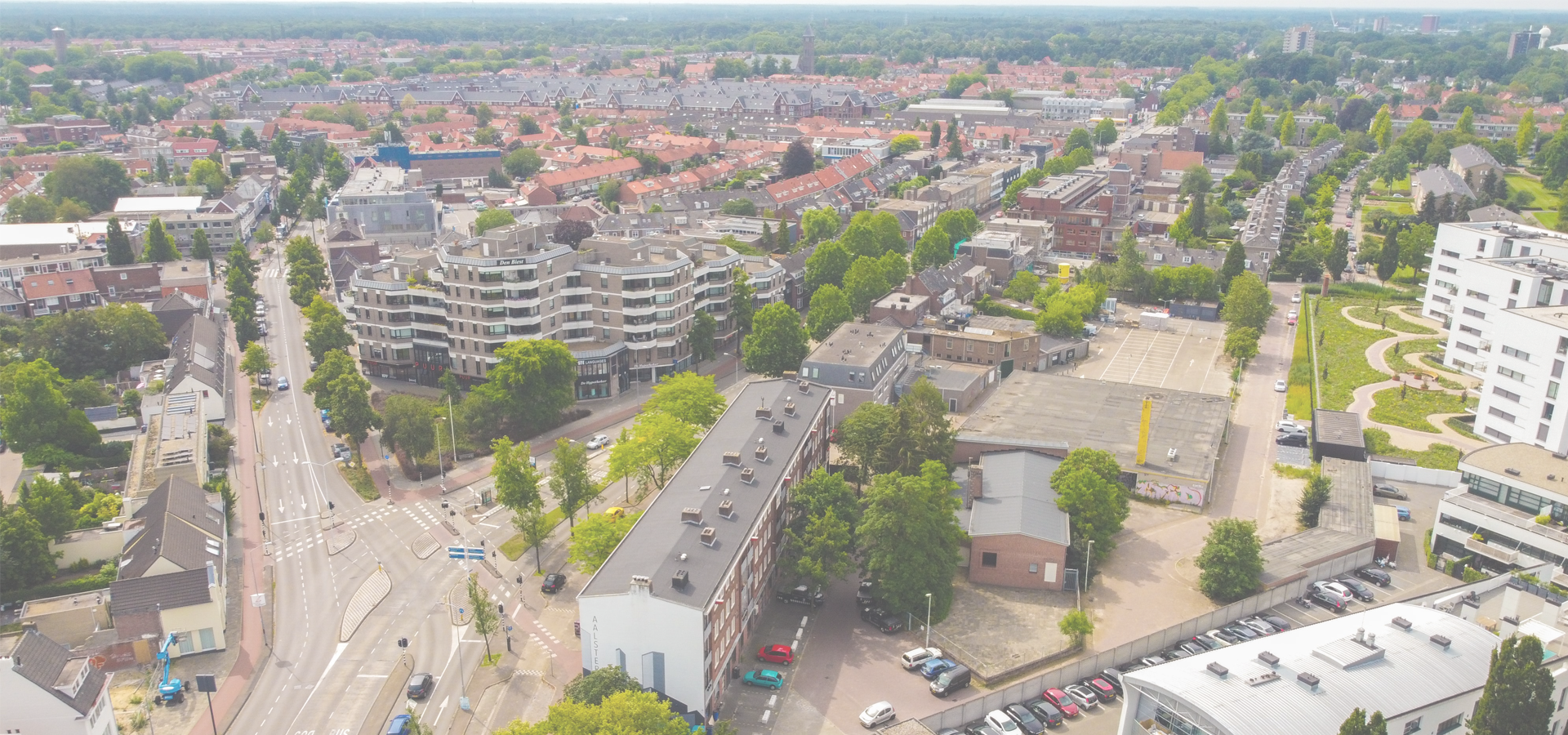
Eindhoven, Provincie Noord-Brabant, Netherlands
Image: Photo by Vishal on Unsplash

Eindhoven was ranked #796 by the Nomad List which evaluates and ranks remote work hubs by cost, internet, fun and safety. Eindhoven has a population of over 216,000 people. Eindhoven also forms the centre of the wider Eindhoven Metropoolregio which has a population of over 755,313 people. Eindhoven is the #103 hipster city in the world, with a hipster score of 4.3918 according to the Hipster Index which evaluates and ranks the major cities of the world according to the number of vegan eateries, coffee shops, tattoo studios, vintage boutiques, and record stores. Eindhoven is ranked #157 for startups with a score of 3.552.

To set up a UBI Lab for Eindhoven see: https://www.ubilabnetwork.org Twitter: https://twitter.com/UBILabNetwork

Twin Towns, Sister Cities Eindhoven has links with:

🇫🇷 Bayeux, France 🇵🇱 Białystok, Poland 🇸🇩 El-Gadarif, Sudan 🇰🇷 Gumi, South Korea 🇷🇴 Iași, Romania 🇯🇵 Kadoma, Japan 🇮🇩 Manado, Indonesia 🇧🇾 Minsk, Belarus 🇻🇳 Thủ Dầu Một, Vietnam 🇿🇦 Vanderbijlpark, South Africa
Text Atribution: Wikipedia Text under CC-BY-SA license | Hipster Index | Nomad | StartupBlink

Antipodal to Eindhoven is: -174.52,-51.435

Locations Near: Eindhoven 5.48008,51.4348

🇳🇱 Meierijstad 5.483,51.583 d: 16.5  

🇳🇱 Helmond 5.65,51.483 d: 12.9  

🇳🇱 Weert 5.7,51.25 d: 25.6  

🇳🇱 s-Hertogenbosch 5.3,51.683 d: 30.3  

🇳🇱 's-Hertogenbosch 5.304,51.69 d: 30.9  

🇳🇱 Maashorst 5.667,51.7 d: 32.2  

🇳🇱 Oss 5.526,51.766 d: 37  

🇳🇱 Tilburg 5.083,51.55 d: 30.3  

🇳🇱 Tiel 5.433,51.883 d: 50  

🇧🇪 Maaseik 5.8,51.1 d: 43.4  

Antipodal to: Eindhoven -174.52,-51.435

🇹🇴 Nuku'alofa -175.216,-21.136 d: 16645.5  

🇹🇴 Nukuʻalofa -175.2,-21.133 d: 16645.2  

🇦🇸 Pago Pago -170.701,-14.279 d: 15869.5  

🇼🇸 Apia -171.76,-13.833 d: 15826.6  

🇵🇫 Papeete -149.566,-17.537 d: 15652.2  

🇺🇸 Hilo -155.089,19.725 d: 11878.7  

🇺🇸 Maui -156.446,20.72 d: 11800.2  

🇺🇸 Maui County -156.617,20.868 d: 11787.6  

🇺🇸 Wailuku -156.505,20.894 d: 11782.5  

🇺🇸 Kahului -156.466,20.891 d: 11781.9  

Bing Map

Option 1