Amioun, North Governorate, Lebanon
🇱🇧 Amioun (أميون: Amyūn; Αμιούν) is the capital of the predominantly Greek Orthodox Koura District (i.e. χώρα, "country" in Greek) in North Lebanon.
1Etymology The town of Amioun derives its name from the Aramaic language, meaning "'am Yawan" "place of the Greeks", with a possible alternative root fortified town with Roman temples. Amioun is located on the top of an ancient hill dating back to before the 2nd millennium B.C., and the town was called "Amia" during this period. The word Amia was cited in the letters of Tell el Amarna, which were sent in the 14th century B.C. by local governors to their overlords, the pharaohs of Egypt. In his etymological study of the names of Lebanon's towns and villages, historian Anis Freiha asserted that Amia is in turn derived from the Semitic word emun, meaning "invincible fort".
The archaeological survey conducted in 2017 in Amioun by the joint Italian-Lebanese mission has revealed a remarkably long and complex settlement sequence, confirming its identification with the ancient site of Ammiya. Initially a small Early Bronze Age (EBA) rural settlement, Amioun grew significantly in the Middle Bronze Age (MBA), emerging as an urban centre and eventually becoming a major political hub in the Late Bronze Age (LBA), dominating the inner Koura plain and rivaling other prominent cities of the region. This development aligns with LBA historical sources from the 16th to 13th centuries BCE. The site's importance persisted into the Iron Age, as evidenced by potential Assyrian pottery finds, indicating strategic relevance during the expansion of the Assyrian Empire. Despite regional upheavals, Amioun/Ammiya maintained its prominence, attracting imperial interest and continuing its key role into the Classical and Medieval periods, making it a crucial site for understanding the archaeology and socio-political history of Northern Lebanon.
1Demographics Amioun had a population of 2,673 in 1953.
In 2014, Christians made up 97.54% of registered voters in Amioun. 89.60% of the voters were Greek Orthodox.
Amioun has a population of 10,658. Almost all the residents are followers of the Greek Orthodox Church of Antioch. Amioun is the largest Greek Orthodox town in Lebanon, and 4th-largest in all of the Levant after Mhardeh, Al-Suqaylabiyah and Kafr Buhum (all in Syria).
1Global Emigration One of the many Lebanese towns where the number of inhabitants is very small compared to the number of its natives who live abroad. Global emigration occurred as far back as the mid 19th century with records showing young men and families migrating to the new world, mainly the Americas (North and South) and Australia. This emigration was greatly hastened after the economic ill fortunes of the silk textile factories after the advent of cheap artificial silk by the far east. Then, successive world wars, The Great Famine of Mount Lebanon, and the Lebanese Civil War (1975–1990) also took their toll. Emigration continues till the present day. Some families are extinct and others are greatly reduced in number. During holidays, especially summer, many of the natives return to visit their relatives.
In the first decade of the 20th century, a significant community from Amioun settled in the Conemaugh Valley, around the city of Johnstown, Pennsylvania. By 1908, a local directory listed twenty individuals from Amioun operating dry goods businesses in the area. These early immigrants laid strong foundations for their community, notably establishing the Saint Mary Antiochian Orthodox Church, which continues to serve the faithful to this day.
In the 1950s, another important destination for emigrants from Amioun was the city of Peoria, Illinois. From the 1970s onwards, a large community also took root in the Boston area, further expanding the Amiouni presence in the United States.
Beyond the U.S., the Amiouni diaspora established vibrant communities in the late 19th and early 20th century in Latin America, particularly in Argentinaand the Dominican Republic, but also in Brazil, Mexico,Colombiaand Trinidad and Tobago. Throughout the 20th century Australia was another important destination, with big communities in the cities of Sydney and Melbourne.A smaller but notable number also settled in Canada, especially in Ottawa and Montreal.
In more recent decades, migration from Amioun has extended to France, West Africa (mostly Nigeria) and the United Arab Emirates, although these movements have largely consisted of temporary labour migration rather than long-term settlement.
In the 2022 Lebanese general election, a total of 6,847 voters were registered in Amioun. Among them, 627—approximately 9.2%—were members of the diaspora. Of these diaspora voters, 23% were registered from Australia, 22% from the United States, 13.4% from the United Arab Emirates, 9.3% from France, and 7.2% from Canada.
1Religion Amioun has eleven Greek Orthodox churches: The Dormition of the Theotokos (Al Sayydeh), St. George el Dahleez, St. John al Sheer, St. Sergios and Bacchus, St. Barbara, St. Domitios, St. Marina, St. Phocas, St. Simon the Stylite, St. George Al-Kafr and Our Lady of Breastfeeding (Mar-Gala).
1Education There are three public and two private schools. The University of Balamand is located nearby, 12 km (7.5 miles) north. There is a public library and a private hospital.
1Geography Located in the heart of Northern Lebanon, Amioun is the administrative centre of Koura District. Amioun is about 370 meters (1,210 feet) above sea level and approximately 78 km away (48.5 miles) north-northeast of Beirut. It is about 42 km (26 miles) away from the Cedars of God and 18 km (11 miles) away from Tripoli, capital of the North Governorate.
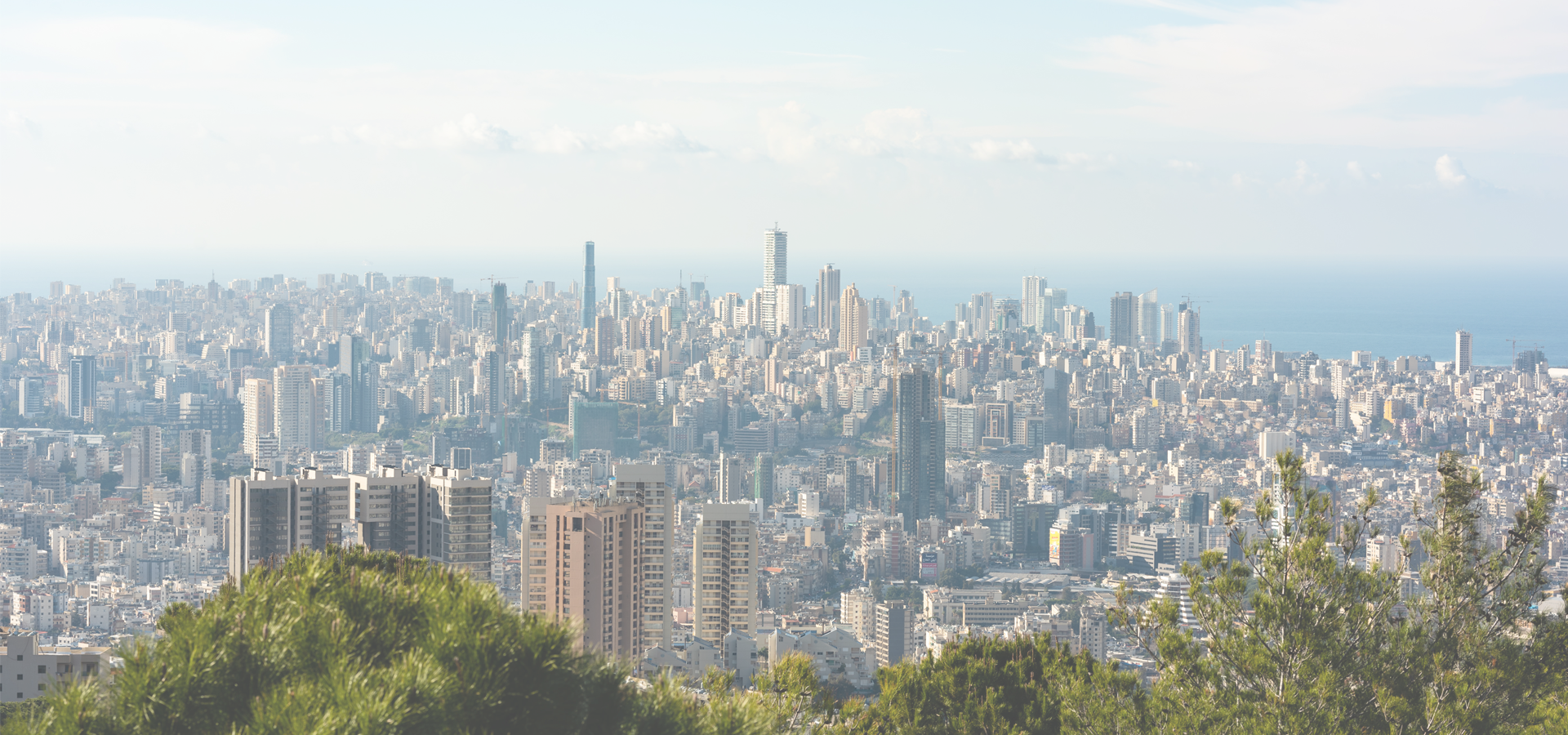
Situated between the sea and the mountains, on a chain of beautiful hills that stretch from east to west, Amioun has a distinctive location and a scenic view. Surrounding the hills on which Amioun is situated are olive fields in the north and vineyards, almond orchards, and olive trees in the south. Paved roads, including the Beirut-Cedars main highway, run through those hills. Long ago, when the houses that stretched on those hills were few, Amioun was called “the town of beautiful hills”. Amioun can be reached via the highway that passes through Byblos, Batroun, Chekka, and Kfarhazir. It can also be reached from Tripoli by way of Bohssas, Dahr-al-Ain, Aaba, and Bishmizzine.
Amioun is also known for its olive trees, which are possibly the oldest in the world, and high grade olive oil.
1History Amioun is a very old settlement whose history can be traced back to the Paleolithic period. This is supported by the number of small caves built in the old city's rocks. In the past years, a number of French and German orientalists – foremost of whom was the Frenchman Ernest Renan – visited it, studied its archaeological sites and wrote about them. The ancient Semitic peoples are thought to have arrived in the region around 4000 B.C.
In his book “The Monuments of Lebanon”, Father Lamens mentions a number of towns, one of which is “Amia” (p. 76). If this connection is correct, Amioun may be considered as the oldest town in the interior of Lebanon.
Amioun's past has left its mark on different historical periods, whether ancient, medieval, or modern. Some of its monuments can be traced back to a period when different pagan religions prevailed. With the advent of Christianity, the Roman pagan temples in Amioun were eventually transformed into churches.
The town -when grew in huge importance during the centuries of the Roman Phoenicia- used to be the site of a Roman temple, which was later converted into a church, dedicated to Saint George (The remains of the temple platform are still visible under a medieval monastery).
1Landmarks • Saint George Cathedral: erected over a former Roman temple at the highest populated spot of the town, as mentioned in a circular written by an instructor of history in the official Lebanese schools Choukrallah Al-Nabbout. (Fig. 1) • Saint John "al-sheer" church: Elevated on a rocky cliff over a number of vaults in the south-eastern facade of the cliff. A Triple scene of a Crusaders church (1099–1100) panoramic over the 28 man-made crypts in the facade whose carbon-dating suggests 15,000–24,000 years of age. • The town of Amioun, is known being a site for the Battle of Amioun in 694 A.D. between the Byzantine troops, under the leadership of Murik and Murikian, and some followers of the Monothelite doctrine, as mentioned in the article below by Chedid Al-Azar.
During the 20th century, major changes touched local population, which was based on agriculture, mainly olive, olive oil and soap production, and modify it into the highest educated society in Lebanon. This resulted in a huge percentage, almost 30%, of highly educated people, mainly in the medical domain.
1Geography: Location The modern town of Amioun lies on an important archaeological tell. Of major interest are the churches of Mar Jurius (St. George), built on the cellar of a Roman temple, and Mar Fauqa, or St. Phocas, built by local architects during the Crusader period. The entire interior of St. Phocas is covered with Byzantine-style wall paintings of the 12th and 13th centuries. A third church is the modern red-roofed Mar Youhanna (St. John) perched on a rocky cliff with tomb openings on its south-eastern facade. Near the old town government building, or "Serail", is the Chapel of Marina, an ancient burial vault converted into a chapel.
1Churches and monasteries There are 13 places of Christian worship in Amioun, including churches and monasteries and shrines. • Cathedral of Saint George el Dahleez (Greek Orthodox) • Church of Saint John al Sheer (Greek Orthodox) • Church of Al Sayydeh (Our Lady) (Greek Orthodox) • Church of Saint Sergios (Greek Orthodox) • Church of Saint Barbara (Greek Orthodox) • Church of Saint Domitios (Greek Orthodox) • Church of Saint Margaret of Antioch|Saint Marina (Greek Orthodox) • Church of Saint Phocas (Greek Orthodox) • Church of Saint Gala (Our Lady) (Greek Orthodox) • Church of Simon the Zealot (Greek Orthodox) • Monastery of Saint George Al-Kafer (Greek Orthodox), built over former Roman temple; • Shrines Cave of Saint Marina (Greek Orthodox) Sacred place of Saint George (Demolished Greek Orthodox Church)
1Villages 1. Aaba 2. Afsdik 3. Ain Akrine 4. Ali-al-Mouran
Amioun 6. Anfeh 7. Badebhoun 8. Barghoun
Barsa 10. Bdebba 11. Batroumine 12. Bishmizzine
Bhabouch 14. Bishriyata 15. Bkomra 16. Bneyel
Bohssas 18. Btourram 19. Btouratige 20. Bkeftine
Bnehran 22. Bsarma 23. Btaaboura 24. Bziza
Charlita 26. Chira 27. Dahr-al-Ain 28. Darbechtar
Darchmezzine 30. Deddeh 31. Fih 32. Ijdebrine
Kaftoun 34. Kifraya 35. Kelbata 36. Kelhat
Kfaraakka 38. Kfarhata 39. Kfarhazir 40. Kaferkahel
Kfarsaroun 42. Kousba 43. Maziriit Toula 44. Mitrit
Mijdel 46. Nakhleh 47. Rachedbine 48. Ras Maska
Ras Osta 50. Wata Fares 51. Zakroun 52. Zakzouk.
Beirut Time
Amioun has a population of over 10,658 people. Amioun also forms the centre of the wider Koura District which has a population of over 75,056 people.
To set up a UBI Lab for Amioun see: https://www.ubilabnetwork.org Twitter: https://twitter.com/UBILabNetwork
Twin Towns, Sister Cities Amioun has links with:
🇬🇷 Kalamata, Greece🇺🇸 Darlington 34.301
🇮🇷 Kermanshah 34.3
🇯🇵 Minamiawaji 34.3
🇺🇸 Gainesville 34.299
🇺🇸 San Fernando 34.287
🇺🇸 Simi Valley 34.286
🇺🇸 Granada Hills 34.283
Locations Near: Amioun 35.8,34.3
🇱🇧 El Mina 35.817,34.433 d: 14.9
🇱🇧 Tripoli 35.85,34.433 d: 15.5
🇱🇧 Batroun 35.65,34.25 d: 14.9
🇱🇧 Miniyeh 35.933,34.45 d: 20.7
🇱🇧 Jounieh 35.635,33.986 d: 38.1
🇱🇧 Zouk Mikael 35.6,33.967 d: 41.4
🇱🇧 Broummana 35.617,33.867 d: 51.1
Antipodal to: Amioun -144.2,-34.3
🇵🇫 Papeete -149.566,-17.537 d: 18076.4
🇦🇸 Pago Pago -170.701,-14.279 d: 16546.9
🇹🇴 Nukuʻalofa -175.2,-21.133 d: 16649.1
🇹🇴 Nuku'alofa -175.216,-21.136 d: 16647.9
🇼🇸 Apia -171.76,-13.833 d: 16430.5
🇺🇸 Hilo -155.089,19.725 d: 13898.2
🇺🇸 Maui -156.446,20.72 d: 13761.4
🇺🇸 Kahului -156.466,20.891 d: 13742.4
🇺🇸 Maui County -156.617,20.868 d: 13741.6